Middle East Unity Could Redefine Global Economic Power Amid U.S.–Israel–Iran Conflict
As the geopolitical landscape shifts following the escalating conflict between the United States, Israel, and...

Dr. Krishna Pandey
Managing Director, MBA, PhD (CSR), CFP
United Economic Forum | Global Outlook Desk | 28 March 2026
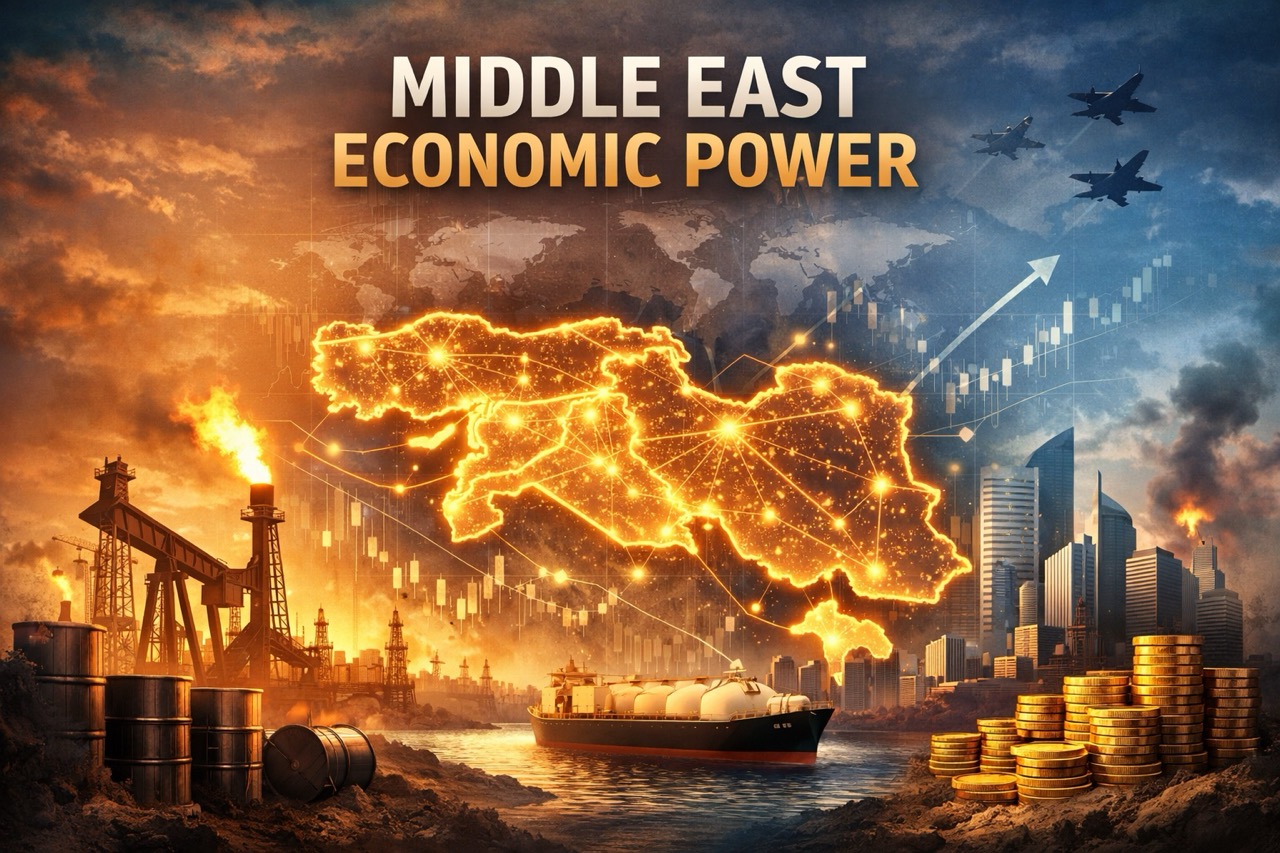
As the geopolitical landscape shifts following the escalating conflict between the United States, Israel, and Iran, a profound question is emerging within global economic circles: Could a more unified Middle East transform crisis into a historic rise in economic power?
War Shock, Economic Realignment
The ongoing conflict has already triggered major disruptions in global markets. Energy prices have surged, supply chains have been strained, and financial markets have experienced heightened volatility. Trading volumes in global commodity markets have reached record highs, reflecting investor uncertainty and the centrality of Middle Eastern energy flows to the global economy.
At the same time, the war is undermining economic stability both regionally and globally. Oil infrastructure damage, reduced drilling activity, and rising insurance and logistics costs are weakening short-term output across the region.
Yet, history shows that moments of disruption often precede structural transformation.
The Strategic Leverage of the Middle East
Despite accounting for only a small share of global GDP—roughly 2–3%—the Middle East holds disproportionate strategic importance due to its control over critical energy routes and commodities.
The Strait of Hormuz alone carries a significant share of the world’s oil and gas supply. Any prolonged instability reinforces the region’s central role in determining global inflation, trade flows, and industrial costs.
This creates a paradox: while conflict weakens local economies in the short term, it simultaneously increases the region’s long-term geopolitical and economic leverage.
From Fragmentation to Unity: A Turning Point?
If Middle Eastern nations move toward deeper economic coordination—through trade integration, energy alliances, and financial cooperation—the region could transition from a conflict-prone zone into a consolidated economic bloc.
Such a transformation could unlock:
- Energy dominance consolidation: Coordinated oil and gas policies could stabilize prices and increase bargaining power globally.
- New financial hubs: Capital inflows could shift toward regional markets as investors diversify away from geopolitical risk elsewhere.
- Infrastructure-led growth: Post-war reconstruction—estimated in the tens of billions—could catalyze industrial expansion and job creation.
- South–South trade expansion: Stronger ties with Asia and Africa could reduce dependence on Western economies.
Risks That Could Derail the Opportunity
However, the path to economic leadership is far from guaranteed.
A prolonged war could instead produce:
- Sustained inflation and stagflation globally due to high energy prices
- Severe regional economic contraction, particularly in conflict zones
- Disruptions to tourism, aviation, and trade routes costing hundreds of millions daily
- Declining investor confidence and delayed infrastructure investment
Moreover, expanding conflict fronts—such as involvement from regional proxies—risk deepening instability and delaying any meaningful economic integration.
A Defining Decade Ahead
The current crisis may mark the beginning of a broader reordering of global economic power. While Western economies face inflationary pressure and declining consumer sentiment, the Middle East stands at a crossroads between fragmentation and strategic unity.
If regional actors can move beyond conflict toward coordinated economic vision, the Middle East could emerge not just as an energy supplier—but as a central pillar of the global economic system.
Dr. Krishna Pandey
Managing Director, MBA, PhD (CSR), CFP
Related Articles
You might also find these interesting